In less than three years, your most valuable organic channel may not be Google search as you know it. It will be the answers your buyers see inside ChatGPT, Gemini, Copilot, Perplexity—and the AI layers sitting on top of search. That is Answer Engine Optimization (AEO), and UpBinger is making a deliberate, high-conviction bet that this will command a major share of SEO budgets by 2027.
For Indian enterprises drowning in content but starved of organic growth, this shift is not theoretical. It is already showing up in falling click‑through rates, volatile rankings, and zero-indexed pages that never see daylight. AEO is the structural response to that problem: designing content not just to rank on pages, but to be selected as the definitive answer by AI systems.
Key takeaway: By 2027, the winners in organic growth will be the brands that treat AEO as a primary channel, not a side experiment layered onto yesterday’s SEO playbook.
Answer Engine Optimization (AEO) is the practice of structuring, writing, and tagging content so AI systems and search assistants can instantly identify, extract, and trust your answers. Where SEO optimized for blue links and snippets, AEO optimizes for direct, conversational responses delivered inside assistants.
Why AEO matters for future marketing is simple: discovery is moving from “ten blue links” to “one authoritative answer.” As chat-based interfaces become the default way people research software, banking, healthcare, and education, the cost of being absent from AI answers will exceed the cost of ranking a few positions lower on Google.
Three macro shifts explain the urgency:
Quotable insight: AEO is not “new SEO”; it is the operating system for how brands will be discovered, evaluated, and recommended in AI-first journeys.
UpBinger forecasts that by 2027, 30–50% of enterprise “SEO” budgets in mature markets will be explicitly earmarked for answer engine optimization initiatives. The logic is economic: marketing money flows to the channels with the highest marginal impact on revenue.
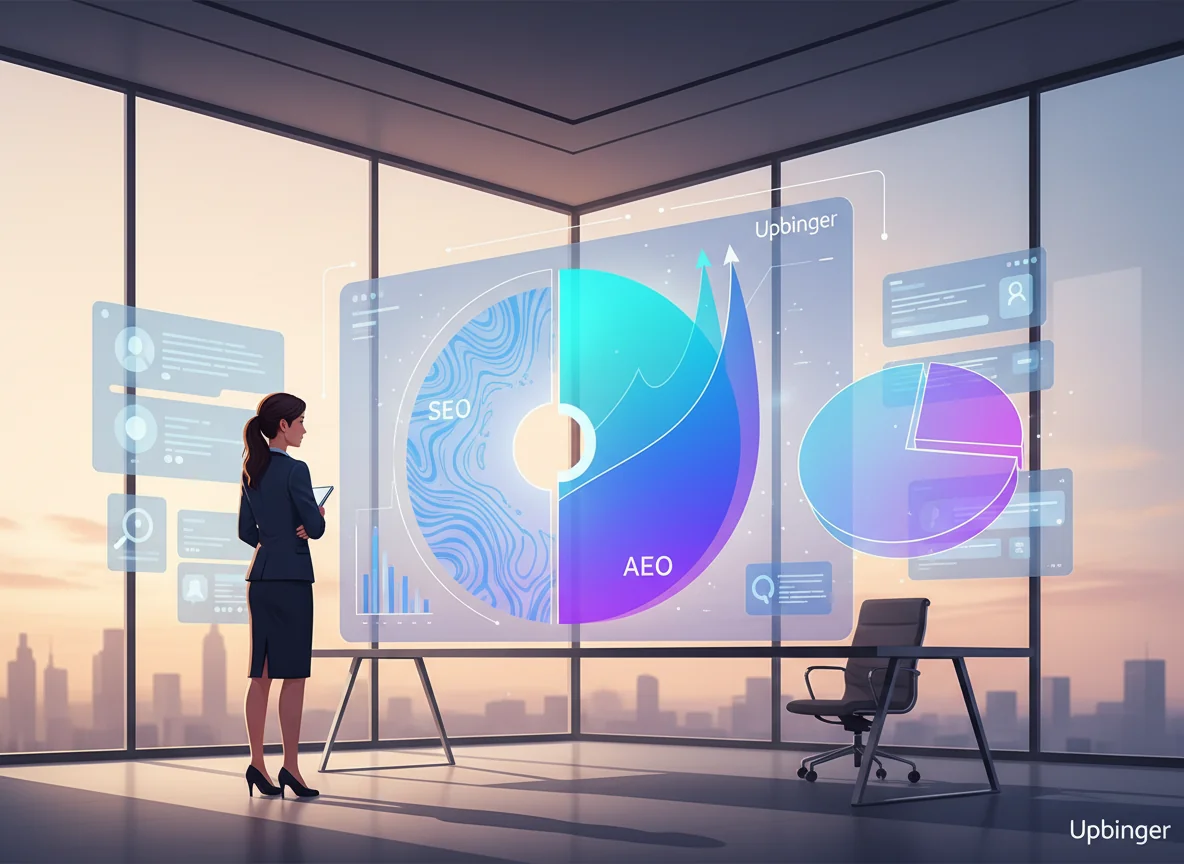
Three investment drivers are already visible in UpBinger’s customer conversations across India and global SaaS players:
Investment trends in answer engine optimization are following a familiar pattern: experimentation budgets in 2024, playbook standardization by 2025, and large-scale reallocation by 2026–2027. UpBinger’s bet is that AEO will transition from “innovation line item” to “core acquisition budget,” much as SEO did in the early 2010s.
Key takeaway: As AI assistants become the front door to the web, any content not optimized for AEO will behave like an unindexed page—technically published, practically invisible.
The UpBinger AEO roadmap is built around a single question: “What does it take for an enterprise brand to be the default answer in AI systems, at scale?” The platform’s R&D bets extend beyond conventional SEO tooling into deep answer intelligence.

Core roadmap pillars include:
In practice, this means UpBinger is moving from “generate content for keywords” to “engineer answer systems for questions.” That is the structural difference between SEO-era tools and an AEO-native platform.
Most enterprises don’t have an AEO problem; they have a visibility problem that AEO simply makes more obvious. Poor search rankings, low organic traffic, and entire content sections with zero indexed pages are symptoms of the same issue: content that is neither technically sound nor answer-worthy.
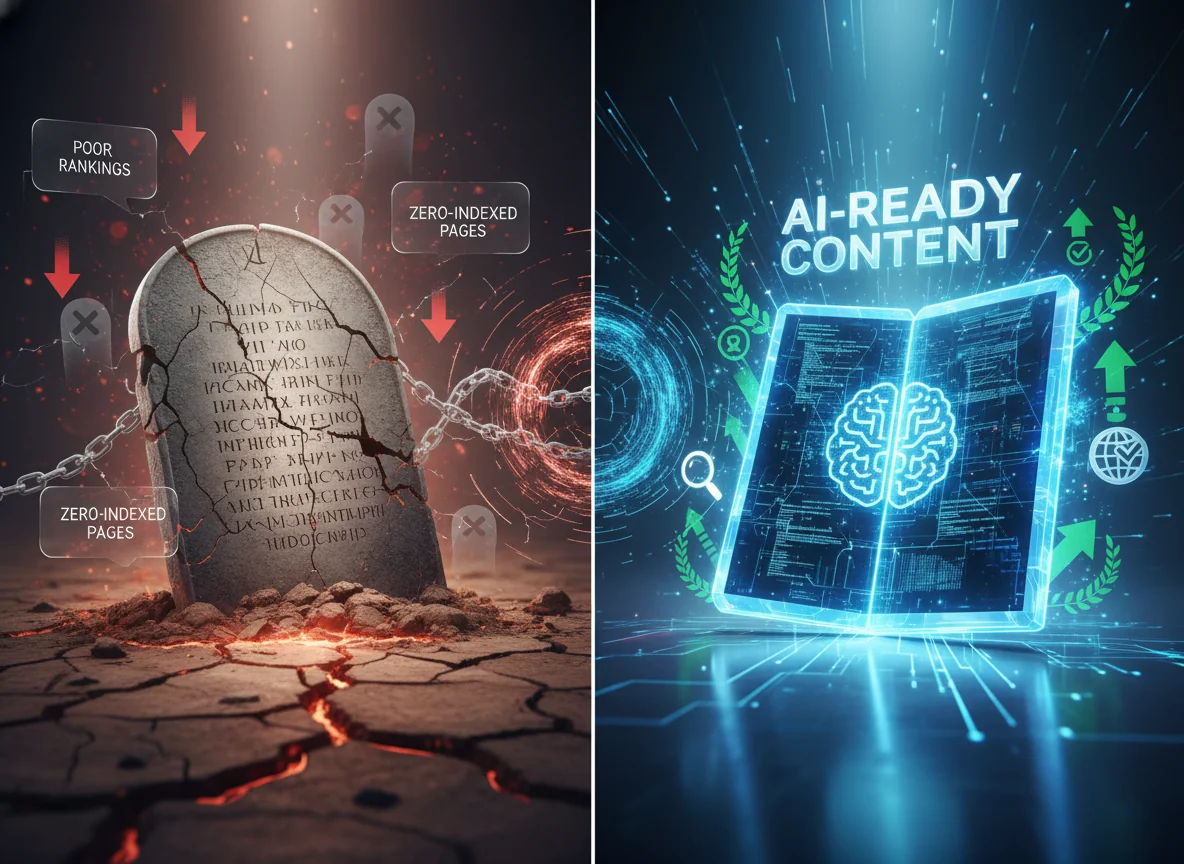
UpBinger’s approach starts with establishing a hard SEO foundation, then layering AEO optimizations on top:
This is where UpBinger differentiates itself in India’s crowded AI content market: by treating high-quality, Google-friendly AI content as table stakes and AEO readiness as the performance layer on top.
Quotable insight: In an AEO world, the cost of low-quality content is not just poor ranking—it is systematic exclusion from AI answers.
AEO content optimization at scale is ultimately a human problem disguised as a technical one. Enterprises need thousands of assistant-ready answers, but they cannot afford thousands of writers or editors. UpBinger’s ai seo content platform is designed to close that gap.
The platform’s design principles are explicit:
By standardizing this structure, UpBinger helps marketing, product, and SEO teams collaborate around “answer templates” rather than ad hoc content requests. The result is fewer, more authoritative pieces of content that are simultaneously optimized for search rankings, SERP features, and AI answer surfaces.
Early investment trends in answer engine optimization suggest that AEO will move through three distinct phases between now and 2027. Each phase favors a different type of marketer—and a different use of platforms like UpBinger.
Phase 1: Exploration (2024). Forward-leaning teams run small pilots: optimizing a handful of pages for AI overviews, experimenting with FAQ structures, and tracking assistant citations. Budgets are modest but growing.
Phase 2: Standardization (2025–2026). AEO becomes a line item in SEO and content roadmaps. Enterprises introduce internal guidelines on schema, answer structure, and AI testing. Tools that integrate AEO directly into workflows—like UpBinger—become default infrastructure.
Phase 3: Consolidation (2027+). AEO budgets merge into “organic discovery” budgets. Leadership measures success not just in clicks, but in share-of-voice across search, assistants, and AI overviews. Vendors without AEO-native capabilities are sidelined.
For Indian enterprises, the strategic opportunity is outsized. Markets where SEO maturity arrived late can leapfrog into AEO-first content strategies, bypassing years of legacy technical debt that Western competitors still carry.
Key takeaway: The competitive frontier is shifting from who publishes the most content to who owns the most questions in AI systems.
To turn AEO from theory into pipeline, UpBinger is focusing on practical, repeatable plays that enterprise teams can deploy immediately. The common thread: each play tackles a real pain—poor rankings, low traffic, or content bottlenecks—while building AEO readiness as a byproduct.
By 2027, the brands that treat these plays as system design—not one-off campaigns—will own a disproportionate share of organic, AI-mediated demand in their categories.
Answer Engine Optimization (AEO) is the process of creating and structuring content so that AI systems—like ChatGPT, Google Gemini, Bing Copilot, and other assistants—can easily find, understand, and quote your answers. Instead of only chasing rankings on search result pages, AEO focuses on becoming the source those assistants rely on when users ask questions. That means writing direct, concise answers, using clear headings and schema, and aligning content with how real people phrase their queries. If SEO was about being on page one, AEO is about being the one answer users see.
Start with three practical steps. First, audit 20–50 of your highest-value pages and rewrite the opening paragraphs to include a clear, 1–2 sentence direct answer to the main query. Second, add structured FAQs that mirror real questions from tools like People Also Ask, Search Console, and customer support logs. Third, implement basic schema (FAQPage, HowTo, Product, Organization) so AI systems can reliably parse your content. Platforms like UpBinger can automate much of this by suggesting answer formats and schema, then tracking how those pages perform across snippets and AI overviews.
AEO matters more over time because user behavior is shifting toward conversational interfaces. When someone asks an assistant “Which AI SEO content platform should I use?”, they often see one synthesized answer, not a list of ten sites. If your brand is not part of the content those assistants trust, you effectively disappear from that customer’s consideration set. Traditional SEO remains foundational—you still need crawlable, high-quality pages—but without AEO, you are optimized for an interface that will occupy a shrinking share of attention.
Enterprises in India often face a unique mix of challenges: rapidly growing digital demand, multilingual audiences, legacy sites with indexing issues, and pressure to show ROI from content budgets. UpBinger addresses this by combining India-aware language models with rigorous SEO and AEO optimization. The platform helps fix zero-indexed pages, build foundational authority around core topics, and generate assistant-ready content that reflects Indian context—such as payment systems, regulations, and market norms. This lets Indian brands leapfrog into AEO-first strategies instead of playing catch-up with older, keyword-only approaches.
All three matter, but for different reasons. Blog posts and explainers are ideal for owning foundational questions like “What is AEO?” or “What is an AI content creation tool?”, making your brand the default explainer. Free tools and templates (e.g., AI text generators, hook generators) attract top-of-funnel traffic and are frequently cited in AI answers as useful resources. Comparison pages—such as “best ai seo content platform” or “UpBinger vs [competitor]”—capture high-intent queries close to purchase. A robust AEO strategy orchestrates all three formats so assistants can reference you across the entire buyer journey.
By 2027, the distinction between “SEO” and “AEO” will likely disappear from board slides. Leaders will talk instead about organic discovery in a world where AI intermediates almost every question. UpBinger’s bet—that answer engine optimization will be the next big marketing channel—is less about terminology and more about how fast enterprises can adapt to that reality.
The path forward is clear:
UpBinger exists for teams who see this shift coming and prefer to lead it rather than react to it. For Indian enterprises and global brands alike, the question is no longer whether AEO will reshape marketing—but who will own the answers when it does.