Topic clusters won traditional SEO. Answer hubs will win AI search. The brands that systematically convert clusters into structured, answer-first content will dominate both Google and AI assistants. This is exactly what UpBinger is built to do.
An AEO-ready answer hub is a structured collection of content that fully covers a topic and is intentionally formatted so AI assistants can retrieve, understand, and cite it. Traditional topic clusters were designed for search engines; answer hubs are designed for both search engines (SEO) and answer engines (AEO).
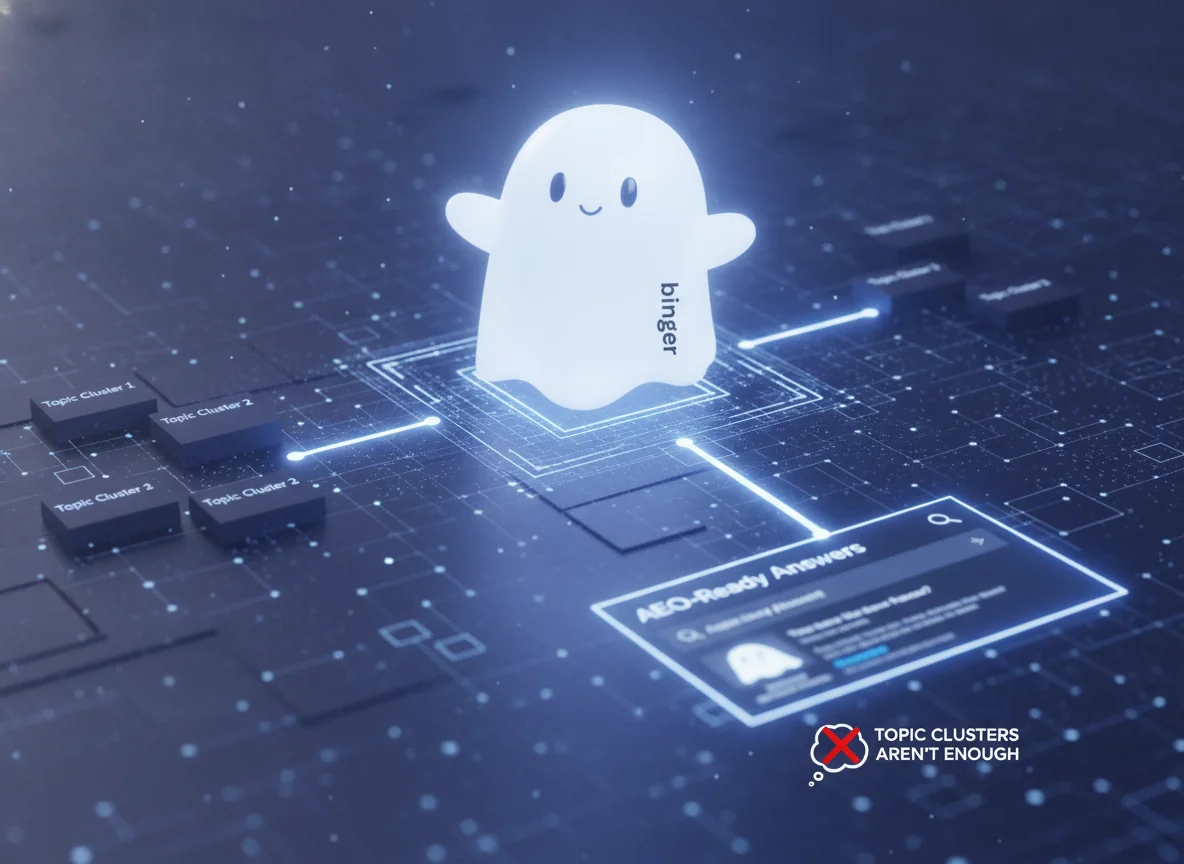
In SEO, a cluster usually means: one pillar page targeting a broad keyword and several supporting articles linked together. This still matters. But AI engines like ChatGPT, Perplexity, and Google AI Overviews don’t think in terms of “SERP positions”; they think in entities, questions, and answer snippets.
An effective answer hub does three things:
Instead of asking “Which page ranks?”, AI engines ask “Which passage best answers this question from a trusted source?”.
Key takeaway: A topic cluster becomes an AEO-ready answer hub when every node in the cluster is optimized to be cited as an answer, not just ranked as a page.
SEO is the practice of optimizing content to rank on search engine results pages and drive clicks. AEO (Answer Engine Optimization) is the practice of optimizing content so AI-powered platforms select and cite it in generated answers. They share foundations but diverge in what “winning” looks like.
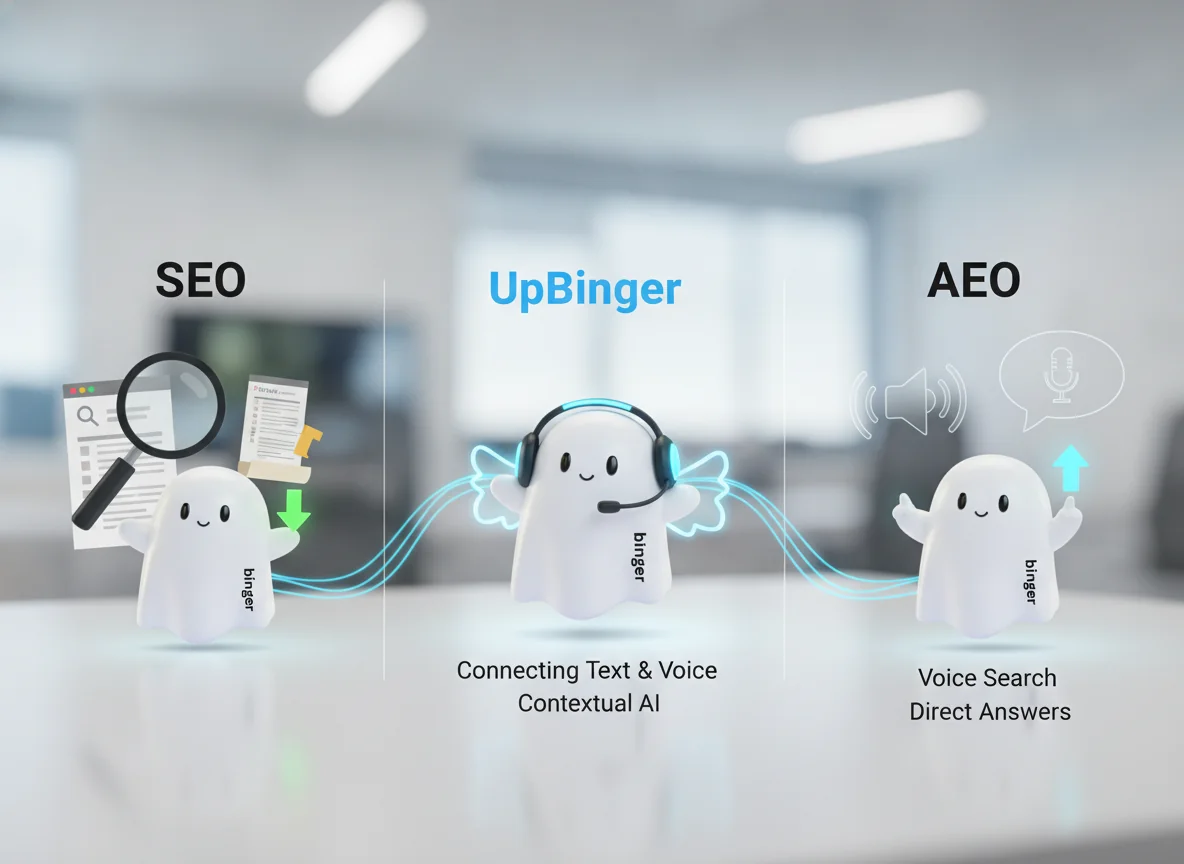
The key differences between SEO and AEO are:
UpBinger is an AI SEO platform built for this convergence. It maintains strong SEO fundamentals—keyword research, technical health, internal linking—while adding specialized AEO content optimization: answer-first scoring, passage-level readiness, schema recommendations, and GEO (Generative Engine Optimization) signals for AI search engines.
Quotable: SEO gets your pages seen; AEO gets your sentences cited. Modern content strategies need both, orchestrated from a single AI platform.
The fastest way to operationalize AEO at an enterprise scale is to start from your existing or planned topic clusters and run them through a repeatable workflow. UpBinger provides this workflow out of the box.
The end-to-end process is:
Instead of isolated articles, you’re building answer infrastructure—clusters engineered to feed AI engines clean, trustworthy passages.
The quality of your answer hub starts with the quality of your topic model. UpBinger’s ai seo platform turns noisy keyword lists into question-centric clusters aligned with how AI engines interpret intent.
The process inside UpBinger typically looks like this:
This produces a blueprint that goes beyond keywords. You see the full “question universe” your answer hub must cover to build topical authority and become a default reference for AI assistants.
Key takeaway: Don’t just cluster keywords—cluster questions. Answer engines think in questions, not head terms.
Once you have your clusters, you convert them into answer hubs by enforcing structure: answer-first paragraphs, scannable sections, and machine-readable markup. This is where UpBinger’s aeo content optimization features come in.
To structure an answer hub page, UpBinger guides you to:
UpBinger scores each section for AEO readiness and flags sections that are verbose, vague, or missing answer-first structure—so your editors fix issues before publishing.
Generative Engine Optimization (GEO) is the practice of tailoring content specifically for AI search engines and AI Overview-like surfaces. UpBinger bakes GEO into your answer hubs so they perform across ChatGPT, Perplexity, and Google AI Overviews.
The core GEO tactics UpBinger operationalizes are:
Because Google AI Overviews heavily favor pages already strong in classic SEO, UpBinger also ensures crawlability, indexation, page speed, and internal linking are solid. GEO doesn’t replace SEO; it rides on top of it.
Quotable: GEO is not a hack—it’s the disciplined practice of writing passages that AI systems are confident quoting.
For enterprises, the challenge isn’t creating one answer hub—it’s governing hundreds. UpBinger turns AEO and GEO from experiments into a managed program.
On the governance side, teams use UpBinger to:
On the measurement side, UpBinger tracks:
With this feedback loop, you can identify which hubs underperform, drill down to weak sections, and re-run aeo content optimization. Over time, your domain evolves into a dense network of answer hubs that AI engines treat as authoritative defaults.
AEO content optimization is the process of structuring and enhancing your content so AI-powered assistants can easily retrieve, understand, and cite it. Practically, this means leading every major section with a direct, 40–60 word answer; using clear headings and question-based subheads; inserting lists for steps or options; and adding structured data like FAQPage and HowTo schema. Tools like UpBinger layer analytics on top of this, scoring each section for answer readiness, entity clarity, and snippet length so you can systematically improve your chances of appearing in AI-generated responses.
Start by grouping related posts into topic clusters around a core theme. Then, for each cluster, choose or create a pillar page that links to all related articles. Within those pages, rewrite H2 and H3 sections to begin with concise answers, add FAQ blocks for common “People Also Ask” queries, and implement relevant schema. UpBinger can automate much of this: it detects cluster relationships, suggests missing questions, rewrites sections into answer-first formats, and validates schema. The result is an upgraded network of content that AI engines can mine for high-quality snippets.
For enterprises, SEO is still essential for driving traffic from traditional search results, but AEO adds a new objective: presence inside AI-generated answers. SEO teams typically organize around keywords, landing pages, and technical health. AEO introduces new objects to manage—questions, answer passages, entities, and schema. Measurement changes too: you still track rankings and clicks, but you add AI citation share, visibility in AI Overviews, and downstream conversions from those surfaces. Platforms like UpBinger help unify both motions so you’re not running two disconnected strategies.
No. UpBinger is designed to augment, not replace, human subject-matter experts. The platform excels at repetitive, structural work: clustering topics, generating first drafts, enforcing answer-first formatting, and suggesting internal links and schema. Human writers and editors are still critical for judgment, nuance, storytelling, and brand perspective—especially for enterprise content where accuracy and trust are non-negotiable. The best results come from pairing UpBinger with experienced practitioners who can refine AI drafts into authoritative, on-brand answer hubs.
Timelines vary by domain authority and competition, but most teams see early signals within 4–8 weeks and more stable impact within 3–6 months. Because many AI surfaces draw heavily from pages that already perform well in organic search, sites with strong SEO foundations tend to see faster gains. Using UpBinger’s aeo content optimization to retrofit existing high-traffic pages is often the fastest win. Over time, consistently publishing well-structured answer hubs compounds your visibility as AI assistants learn to trust and cite your domain more frequently.
The shift from blue links to AI answers doesn’t make SEO obsolete—it raises the bar. Topic clusters alone no longer guarantee visibility. The brands that win in India’s fast-maturing digital market will be those that systematically convert clusters into AEO-ready answer hubs, optimized for both rankings and citations.
UpBinger gives you the operating system for that shift: AI-powered topic discovery, question-centric clustering, answer-first content generation, aeo content optimization scoring, GEO-focused formatting, and enterprise governance. Instead of guessing what AI engines want, you build content the way they already work—by questions, entities, and passages.
The next step is simple: choose one strategic cluster—like “AI for SEO” or “enterprise content platform”—and run it end-to-end through the UpBinger playbook described above. Once you see how quickly a single cluster becomes a functioning answer hub, scaling the approach across your content universe becomes an execution question, not a strategy problem.