
Something strange is happening in your analytics. Organic traffic looks stable, but pipeline from search is flatter than it should be. Prospects tell your sales team they "already researched this"—but your site wasn’t part of that journey. That gap is the difference between traditional SEO and the emerging world of Answer Engine Optimization (AEO).
In a world where buyers ask ChatGPT, Copilot, and Perplexity what to buy long before they Google you, optimizing only for blue links is a losing strategy. You now have two battles to win: ranking in search engines, and being quoted, summarized, and recommended by AI systems.
This article is a decision playbook, not a trend piece. We’ll decode SEO vs AEO in practical terms, map them to real buyer journeys, and show how platforms like UpBinger can help you build one integrated approach—so you stop leaking high-intent demand to competitors who are already optimizing for AI answers.
For two decades, SEO strategy was built around a predictable flow: query → results page → click → website. Visibility meant ranking on Google; content meant pages; success meant organic traffic. That mental model is now incomplete.
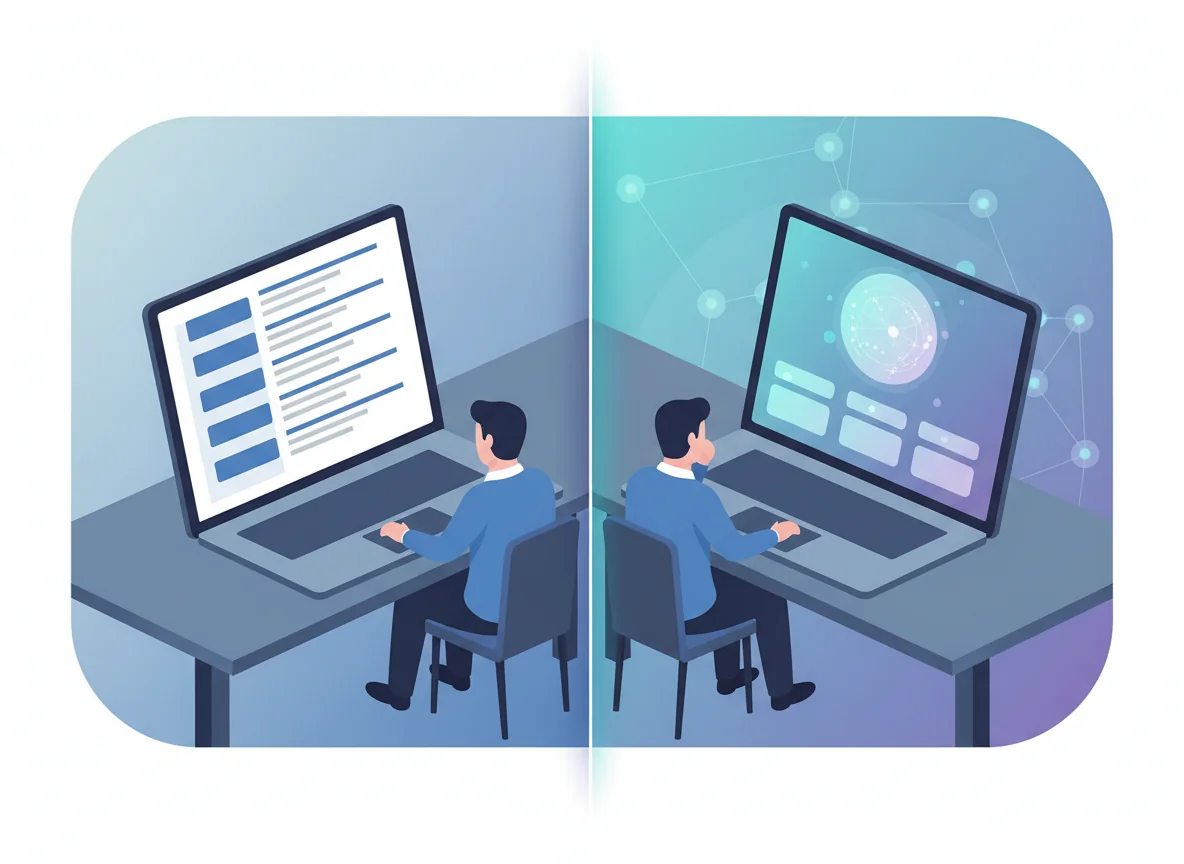
Three shifts have reshaped how people find and evaluate information:
For B2B SaaS and agencies, the consequences are stark. Early-stage research is shifting into AI interfaces, where only a handful of sources shape the model’s response. If you’re not optimized for those answer engines, you become invisible long before the shortlist.
SEO remains the backbone of digital acquisition. Even with AI overlays, Google Search still drives the majority of high-intent, bottom-of-funnel traffic for most B2B and niche content businesses. When someone searches "UpBinger pricing" or "AI-powered SEO platform demo," they’re signaling commercial intent that traditional SEO is very good at capturing.
Contemporary SEO does three critical jobs:
But classic SEO metrics can be deceptive. Organic traffic may rise while referral share in AI answers stagnates. Rankings may look strong while AI overviews or answer boxes absorb clicks. The key shift: SEO is now necessary but not sufficient. It’s the foundation for discoverability, but it no longer guarantees you’ll influence the buyer’s informational journey, especially in the earliest, problem-framing stages.
Answer Engine Optimization (AEO) is the discipline of shaping how AI systems—chatbots, copilots, voice assistants, and AI-enhanced search—interpret, quote, and synthesize your content into direct answers.
Where SEO asks, "How do we rank for this keyword?" AEO asks, "How do we become the most reliable, structured, and reusable source when an AI is answering questions in this domain?" That subtle shift has major implications.
At a practical level, AEO focuses on:
Crucially, AEO isn’t about tricking models. It’s about being the most helpful, unambiguous, and structurally clear source on a topic—so when AI answers, your thinking becomes the buyer’s default understanding.
SEO and AEO overlap heavily, but they introduce different constraints and success criteria. Treating them as identical leads to content that underperforms in both worlds.
1. User intent surface
2. Content format and structure
3. Optimization focus
4. Core metrics
For decision-makers, the takeaway is simple: SEO optimizes for visibility in result lists; AEO optimizes for influence within synthesized answers. You need both to own the full path from early questions to late-stage evaluation.
Instead of running SEO and AEO as parallel, competing initiatives, treat them as a single system optimized for different stages of the same journey. A practical playbook looks like this:
1. Map questions to stages, not just keywords. For a buyer of an AI content platform, the journey might progress from "why is our organic traffic flat?" to "AI SEO platform vs agency" to "UpBinger demo." Catalog these as question graphs, not just keyword lists.
2. Build cornerstone clusters with dual intent. Create deep content hubs around topics such as "AI content marketing" or "AI-powered SEO platforms" that:
3. Make every core page answer-engine ready. Product, solution, and comparison pages should include:
4. Treat "demo" and "quote" pages as the conversion spine. Ensure all informational and comparison content routes cleanly into your demo/quote CTAs, so whether a user arrives from Google or an AI-augmented journey, the path to pipeline is obvious.
Manually orchestrating SEO and AEO at enterprise scale is brittle: hundreds of pages, thousands of questions, shifting AI interfaces. This is where an AI-native platform like UpBinger becomes strategic infrastructure rather than another point tool.
1. AI-assisted research that spans SEO and AEO. Instead of keyword lists alone, UpBinger can map the broader question universe: what prospects ask in AI systems, support tickets, sales calls, and traditional search—then cluster them into coherent content themes.
2. Content generation tuned for both engines. Templates that:
3. Enterprise control and consistency. Governance features ensure that claims, differentiators, and product terminology are consistent across all content that AI systems might train on or reference. That consistency makes models more likely to associate your brand with specific problems and solutions.
4. Closed-loop optimization. As AI surfaces change (e.g., new AI-overview modules in search, more aggressive copilots in browsers), UpBinger can help audit which topics are underrepresented in AI answers and prioritize content updates accordingly—bridging the gap between visibility metrics and revenue outcomes.
To turn today’s problem-aware traffic into tomorrow’s qualified pipeline, you need more than isolated experiments. You need a sequenced plan that aligns SEO and AEO work with revenue goals.
Quarter 1: Foundation and visibility
Quarter 2: Authority and comparison
Quarter 3: Answer-engine dominance
Quarter 4: Conversion optimization
SEO (Search Engine Optimization) focuses on helping your pages rank in search engine results for specific keywords. Its core goal is to earn clicks from results pages into your website. AEO (Answer Engine Optimization) focuses on how AI systems—like ChatGPT, Perplexity, Copilot, and voice assistants—use your content to generate direct answers. Instead of optimizing only for rankings and clicks, AEO optimizes for being cited, quoted, and trusted inside those synthesized responses. In practice, SEO is about visibility in lists of links, while AEO is about influence within AI-generated explanations and recommendations.
Begin by listing the natural-language questions your buyers actually ask, not just the keywords they might type. Then audit your key pages: do they contain clear definitions, concise answer paragraphs, structured headings, and a dedicated FAQ section? Add explicit, well-formatted answers to your highest-value questions using H2/H3 headings and short, self-contained paragraphs. Implement relevant schema (FAQPage, HowTo, Product) to give machines more structure. Finally, prioritize a few cornerstone topics and make them the most authoritative, structured resources in your space. A platform like UpBinger can streamline this research, creation, and optimization at scale.
AI systems increasingly sit on top of traditional search, intercepting and reshaping user behavior. Google is rolling out AI overviews; Microsoft is pushing Copilot; standalone tools like Perplexity are gaining traction. These answer layers can significantly reduce clicks to individual sites, even when rankings don’t change. If your content isn’t optimized to be used by these systems, you risk losing influence over early research and vendor shortlists. At the same time, AEO-friendly content tends to strengthen SEO: better structure, clearer intent, and stronger topical authority—making AEO and SEO mutually reinforcing, not competing priorities.
SaaS buyers typically move from problem discovery to solution framing to vendor selection through self-serve research. Use SEO to capture high-intent queries around your category, features, and integrations, and to build deep topical hubs. Layer AEO by designing those same pages to answer the conversational questions buyers ask AI systems during earlier research. Include sections that define the category, compare approaches, and outline evaluation criteria. Make sure every major guide and product page routes clearly to demo and pricing CTAs. This way, whether a buyer starts in Google or in ChatGPT, your content can shape their thinking and then convert them into pipeline.
For a small site with a handful of pages, you can apply AEO principles manually: add FAQs, improve structure, and write clearer answers. But as soon as you’re dealing with dozens of topics, multiple personas, and frequent product changes, manual AEO becomes hard to maintain. You need to track evolving questions, ensure consistency, and update content quickly across clusters. An enterprise platform like UpBinger helps by unifying research, content generation, optimization, and governance so every piece you publish is both SEO- and AEO-ready by design, and you can adapt as AI search behaviors shift.
SEO vs AEO isn’t a choice; it’s a sequencing problem. First, earn the right to be discovered by building a technically sound, authoritative SEO foundation. Then, earn the right to be quoted and trusted by structuring your ideas so AI systems can easily use them in answers.
Brands that treat AEO as a bolt-on hack will chase every new interface and feature. Brands that treat it as an extension of thoughtful, buyer-centric content strategy will compound advantages: their language becomes the default way markets think about problems, their frameworks shape evaluation criteria, and their products appear inevitable by the time buyers hit "request demo."
If you’re ready to operationalize that advantage, the next step is to audit where your SEO is strong but your AEO is weak—and to build a roadmap that unifies both. Platforms like UpBinger exist to make that shift practical: turning every page you publish into something that ranks, answers, and converts in an AI-first search landscape.