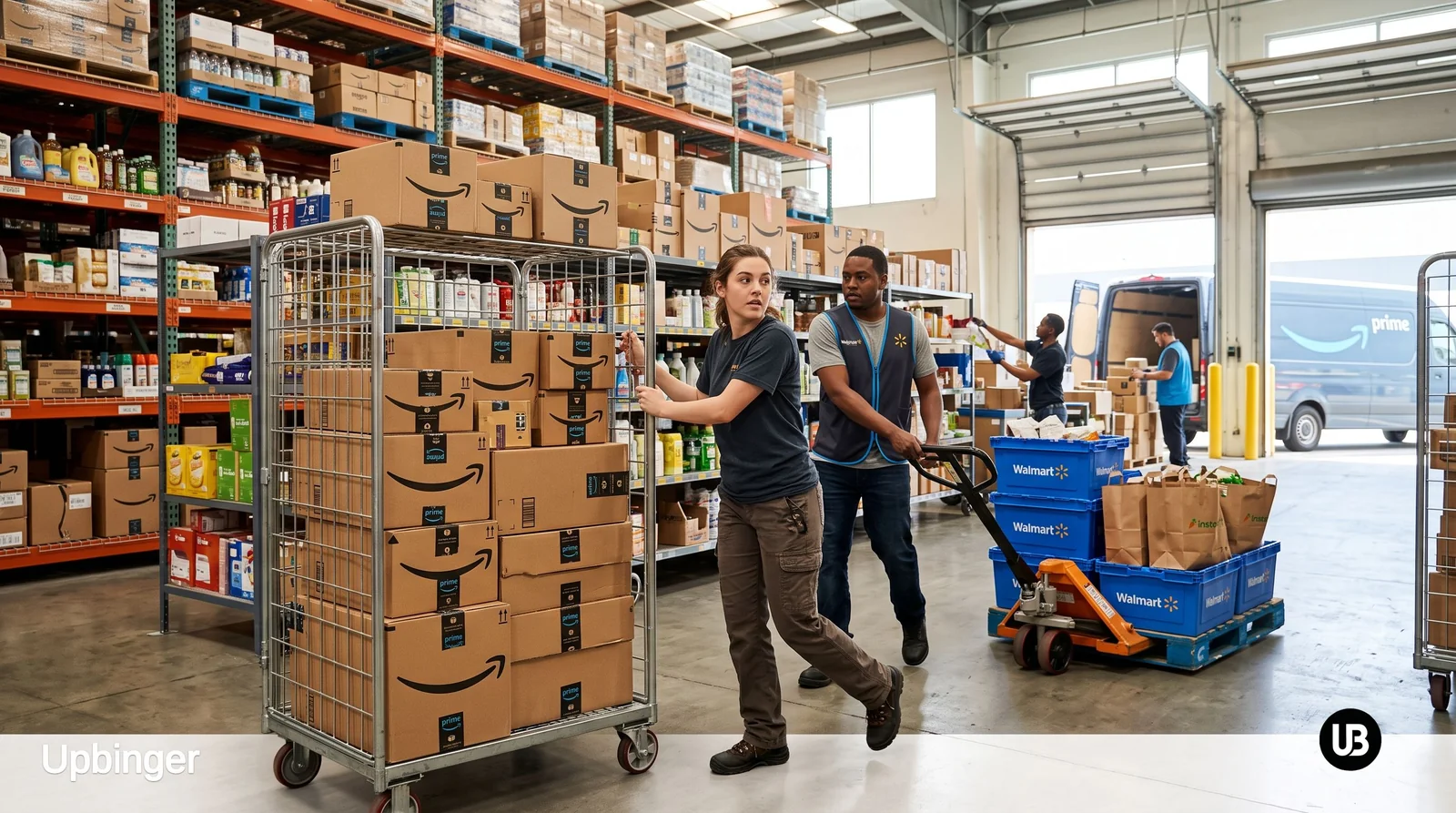
Retail media is the fastest-growing channel in performance marketing, and it’s quietly changing who owns the customer, the data, and the last click. In a few years, the most important ad platforms for many brands may not be Google or Meta—but Amazon, Walmart, Instacart, Flipkart, and other commerce giants.
Retail media is the ad inventory that lives inside online stores and marketplaces: sponsored product listings, display units, video, and offsite audiences built from shopper data. Marketplace ads are the performance layer of this ecosystem, turning search results and product pages into auction-based media.
For CMOs, this shift is not incremental. It’s a re-architecture of the funnel around transaction data and closed-loop measurement. For performance marketers, it’s a move from keyword marketing to commerce moment marketing.
Retail media is where intent, identity, and transaction data converge—turning every product search into a performance media opportunity.
This article breaks down how retail media works, why it’s growing so fast, what it means for performance marketing, and how AI-native platforms like UpBinger can help brands win in a world where every shelf is a search result.
Retail media is digital advertising that runs on a retailer’s or marketplace’s owned properties, typically using first-party shopper data. Commerce media is the broader ecosystem of advertising that connects product discovery, consideration, and purchase across channels using commerce signals.
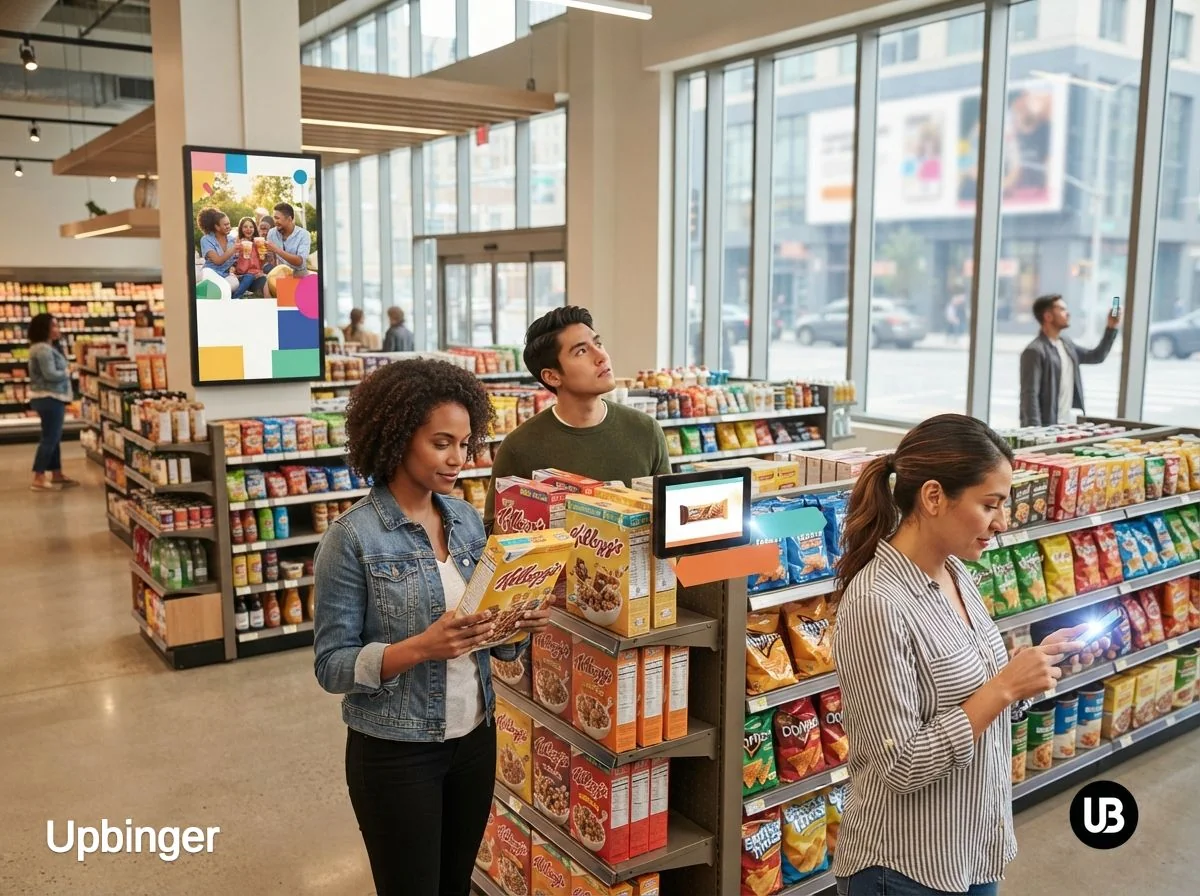
In practice, retail media includes:
Marketplace ads are the performance core of retail media: auction-based placements tied directly to SKU-level sales, ROAS, and share of shelf.
Why does this matter? Because retailers sit on three assets Google and Meta don’t fully own:
Retail media turns the store itself into an ad network, with every search bar and product grid acting as performance inventory.
As privacy rules restrict third-party cookies, these logged-in, transaction-rich environments become the new default battlefield for performance budgets.
Retail media is growing faster than almost any other major channel. Global estimates consistently show year-on-year growth above 20%, with commerce media expected to exceed traditional TV spend in several markets this decade. In many mature advertisers, 10–25% of digital budgets are already flowing to retail networks, and India is catching up rapidly.

Three groups are leading:
Amazon remains the benchmark, generating billions in high-margin ad revenue. Walmart Connect is positioning itself as an omnichannel retail media giant—closing the loop between in-store and online. Instacart Ads has quietly become indispensable for CPG brands fighting for digital shelf space in grocery.
The center of gravity in performance advertising is shifting from search engines to digital shelves—and budgets are following the shopper, not the channel.
For Indian brands, the landscape is even more fragmented: Amazon, Flipkart, JioMart, BigBasket, Blinkit, Zepto, and emerging quick-commerce players all offer ad products that blur the line between trade spend and performance marketing.
Retail media is changing performance marketing by compressing the funnel and moving optimization closer to the point of sale. Instead of optimizing for clicks and conversions on brand sites, marketers now optimize for share of search, share of shelf, and incremental sales inside marketplaces.
Three structural shifts stand out:
This also changes org design. Trade marketing, ecommerce, and performance teams can no longer operate in silos. Your bid strategy for Amazon Ads is only as good as your inventory, ratings, content, and pricing. Retail media is forcing marketers to think like P&L owners, not just traffic generators.
In retail media, performance marketing becomes merchandising with math—winning the shelf with algorithms instead of endcaps.
Amazon Ads, Walmart Connect, and Instacart Ads all run auction-based marketplaces that prioritize relevance, bid, and expected performance—but each has distinct mechanics marketers must master.
Amazon Ads offers:
Success depends on high-quality product content, keyword strategy, and constant bid/placement optimization.
Walmart Connect mirrors much of Amazon’s structure but adds a powerful omnichannel twist: in-store sales and loyalty data feed targeting and measurement. For CPG and FMCG, this makes Walmart less a "nice-to-have" and more a core performance channel.
Instacart Ads specializes in grocery missions and baskets. Sponsored product placements appear at multiple points in the shopper journey, from search to replacement flows. Winning here is about defending core listings and attaching into baskets at the right moment.
Every retail media platform is its own micro-search engine—with distinct auction rules, content needs, and optimization levers.
For India-focused brands, the logic is similar across Amazon, Flipkart, and quick-commerce apps: whoever best aligns content, bids, and availability wins disproportionately.
AI, Answer Engine Optimization (AEO), and Generative Engine Optimization (GEO) are becoming critical because discovery is shifting beyond search boxes into AI assistants and generative experiences that sit on top of marketplaces and the open web.
Answer Engine Optimization (AEO) is the practice of structuring content so that AI systems (like ChatGPT, Google’s AI Overviews, or retail site assistants) can easily extract and surface it as answers. Generative Engine Optimization (GEO) extends this to generative experiences that synthesize multiple sources into one recommendation.
Applied to retail media, that means:
The brands that win in the next wave of retail media will design content for two audiences: shoppers and machines.
This is where a platform like UpBinger becomes strategic: it doesn’t just generate SEO content; it optimizes for how AI and generative engines interpret, reuse, and recommend your brand across channels, including commerce and marketplace contexts.
Enterprise brands can build a scalable retail media engine by unifying content, data, and optimization across retailers—something humans and spreadsheets alone can’t handle. UpBinger, as an AI-powered SEO & AEO content platform, is built for exactly this kind of complexity.
A practical enterprise playbook looks like this:
Retail media performance is capped by content quality and relevance. AI turns content from a bottleneck into a growth lever.
Instead of manually rewriting assets for every marketplace, UpBinger lets enterprise teams orchestrate content centrally and deploy locally—at the pace retail media now demands.
Indian marketers should treat retail media and commerce media as a core pillar of performance marketing, not just a trade add-on. The most effective teams follow a clear, staged roadmap.
Step 1: Map your retail footprint. List all marketplaces and quick-commerce partners: Amazon, Flipkart, JioMart, BigBasket, Blinkit, Zepto, Meesho, Nykaa, PharmEasy, etc. Rank them by revenue and growth potential.
Step 2: Audit content and discoverability. For your top 20–50 SKUs per retailer, benchmark:
Step 3: Build a cross-functional squad. Bring together ecommerce, performance, brand, and sales/trade into a single retail media pod with clear P&L accountability.
Step 4: Deploy AI for scale. Use UpBinger to deepen product content, generate retailer-specific SEO/AEO pages, and create comparison and how-to content that captures both search and answer engines.
Step 5: Continuously improve. Treat retail media like always-on performance: weekly optimization sprints, test-and-learn frameworks, and measurement focused on incremental sales, not just ROAS.
The brands that win commerce media in India won’t be the loudest—they’ll be the ones that make every digital shelf an intelligent, optimized storefront.
A retail media network is an advertising platform operated by a retailer or marketplace that sells ad inventory on its own properties (websites, apps, in-store screens) and often across external channels. These networks use first-party shopper data—logins, browsing behavior, and transaction history—to target ads and measure performance. Examples include Amazon Ads, Walmart Connect, Instacart Ads, and in India, emerging offerings from Amazon, Flipkart, Jio platforms, and quick-commerce apps. For brands, retail media networks provide highly measurable, bottom-funnel placements tightly linked to actual sales, not just clicks or impressions.
Amazon Ads and other marketplace ads use auction-based systems similar to search advertising. Brands bid on keywords or product targets, and the platform decides which ads to show based on bid, relevance, and expected performance. Sponsored products appear in search results and product detail pages, while sponsored brands and display units provide more visual impact. Advertisers pay when shoppers click, and performance is measured at SKU level—units sold, revenue, ACOS/ROAS, and share of search. The key to success is aligning bids, great product content, ratings, and stock so that algorithms favor your listings.
Retail media is important because it connects advertising directly to sales with closed-loop measurement. Instead of optimizing for traffic to a brand site, marketers optimize for on-platform conversions where the purchase actually happens. As privacy regulations reduce third-party tracking and cookies, retailers’ first-party shopper data becomes more valuable. Retail media lets brands reach high-intent shoppers at the moment of decision—inside the digital shelf—while seeing exactly which ads, keywords, and creatives drive incremental units and revenue. This makes it one of the most accountable and scalable performance channels available.
To measure retail media ROI, go beyond surface metrics like clicks and impressions. Focus on: 1) Sales impact – units, revenue, and margin generated by campaigns; 2) Incrementality – sales you wouldn’t have captured without ads, often tested via geo or audience holdouts; 3) Share of search/shelf – your visibility for priority keywords vs. competitors; and 4) Customer metrics – repeat purchase and basket penetration for key SKUs. Use platform dashboards plus your internal sales data, and review weekly. Over time, shift budget toward campaigns proving incremental lift, not just high ROAS on already-strong products.
AI helps by automating and scaling the most time-intensive parts of retail media. Tools like UpBinger can generate optimized titles, descriptions, bullets, and FAQs tailored to each marketplace’s SEO rules; analyze search behavior to uncover new keyword and query opportunities; structure content for Answer Engine Optimization so AI assistants can easily surface your products; continuously test copy and imagery variations and learn from performance data; and harmonize content across dozens or hundreds of SKUs and retailers. This turns content from a manual bottleneck into a measurable performance lever across the entire commerce media mix.
Retail media and marketplace ads are not a side project for the trade team; they are the new operating system of performance marketing. The channels with the best combination of intent, identity, and transaction data are increasingly owned by retailers, not search engines—and budgets are following.
Winning this shift requires three commitments: treat every marketplace as a search engine you must optimize for; build a cross-functional retail media engine that blends marketing, sales, and ecommerce; and use AI platforms like UpBinger to power content, AEO/GEO readiness, and continuous optimization at enterprise scale.
The question isn’t whether retail media will reshape your marketing mix. It’s whether you’ll be ready when your most important customers start discovering brands more through digital shelves and AI answers than through traditional search ads. The brands that act now will own the next decade of commerce media in India and beyond.