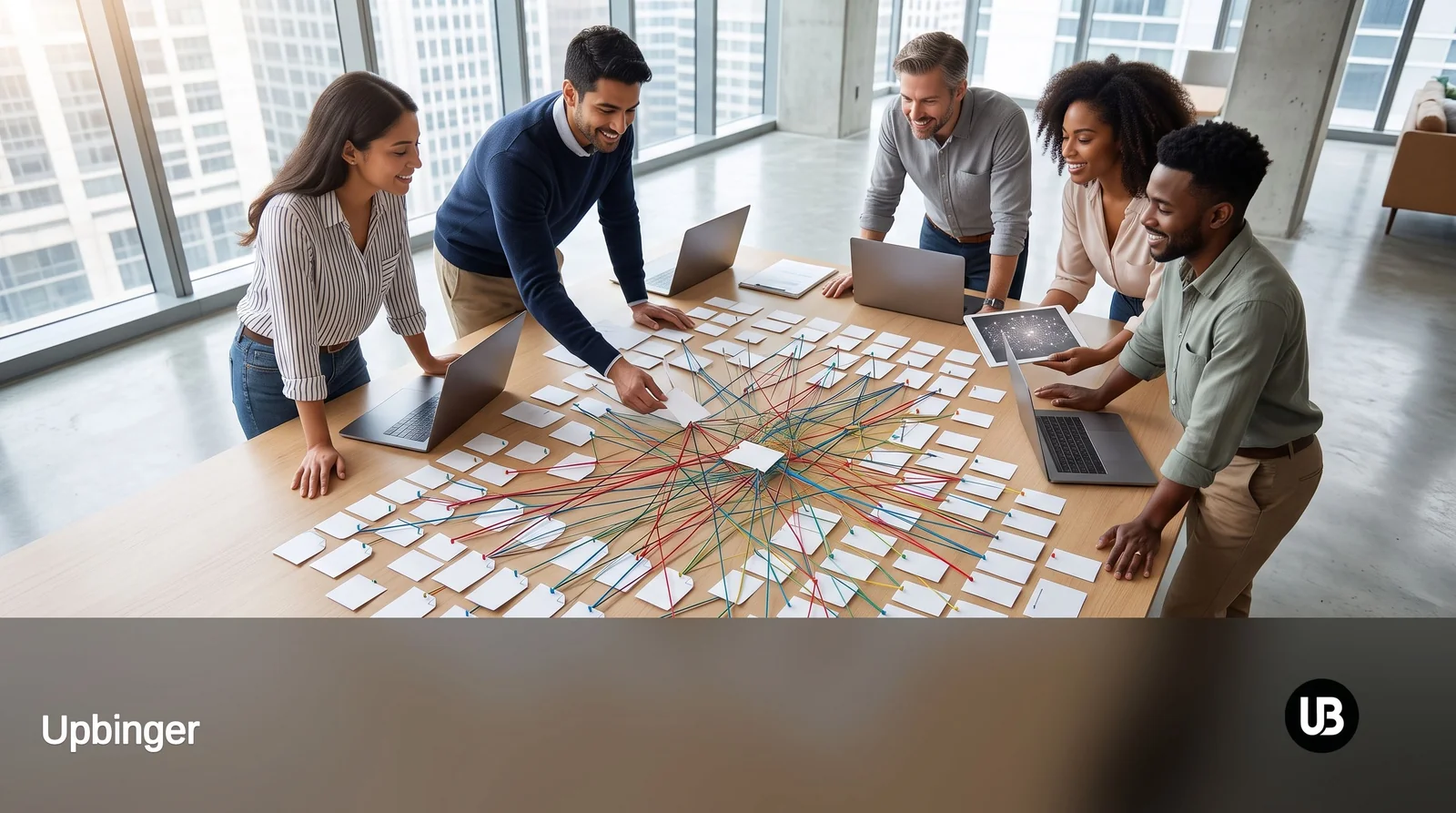
Most enterprise sites are leaking traffic through something deceptively simple: internal links. Not because SEOs don’t know they matter, but because no human can manually maintain a perfect link graph across thousands of URLs in a search landscape dominated by AI Overviews and answer engines.
This is where AI-powered SEO platforms like UpBinger change the game. By treating internal links as a dynamic, data-driven network instead of a static checklist, AI can design and maintain a link architecture that improves crawl paths, topical authority, user experience—and increasingly, visibility in AI search results.
This article walks through exactly how to do it: from setting up data foundations to deploying AI agents that recommend, prioritize, and even orchestrate internal links at scale. The focus is highly tactical, built for practitioners who need fast, defensible wins on large sites in India and beyond.
AI is now essential for internal linking because the search environment has shifted from page-by-page rankings to answer and generative engines that map whole topic ecosystems. Internal links are the structural signals those engines use to understand your authority.
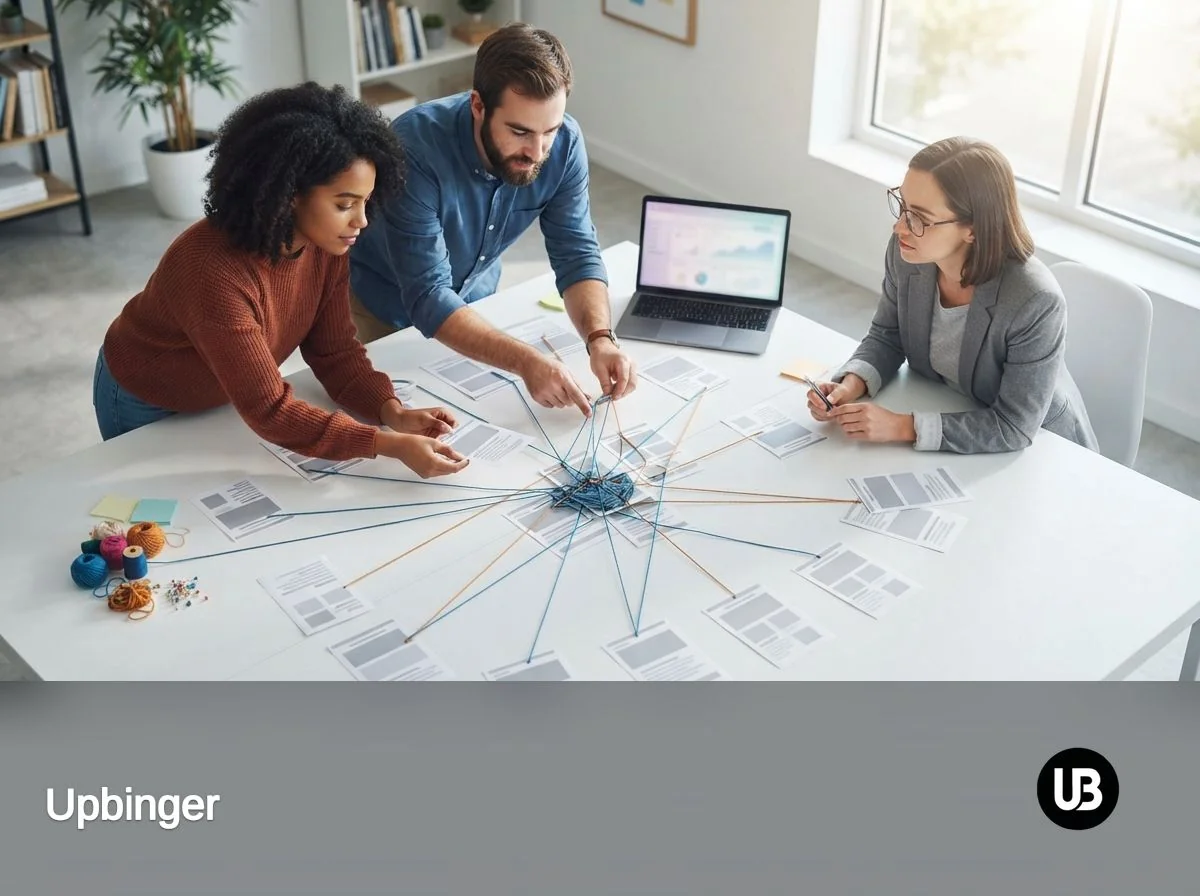
Internal linking is the practice of connecting pages within your own domain using hyperlinks. Traditionally, it helped distribute PageRank and guide crawlers. Today, it also helps AI systems infer which pages are “pillar” answers and which are supporting evidence.
At enterprise scale—10,000+ URLs, frequent content changes, multiple teams—manual internal linking is inherently incomplete and quickly outdated. AI solves three core problems:
Answer Engine Optimization (AEO) and Generative Engine Optimization (GEO) both reward sites that demonstrate deep, well-organized topical coverage. Internal links are how you surface that structure for AI.
Key takeaway: AI doesn’t replace your internal linking strategy—it operationalizes it continuously, turning a one-off audit into an always-on system that supports SEO, AEO, and GEO simultaneously.
AI SEO software improves search rankings by identifying, prioritizing, and orchestrating internal links that align with how search and AI engines evaluate authority, relevance, and crawl efficiency.

At a technical level, platforms like UpBinger combine crawl data, analytics, and content intelligence to:
Enterprises implementing AI-driven internal linking often see 15–30% improvements in organic traffic to key clusters within a few months, primarily from better coverage of long-tail queries and more stable rankings for critical pages.
Quotable insight: “AI SEO software improves search rankings by turning internal links from an afterthought into a measurable, continuously optimized ranking asset.”
AI improves content relevance for search engines by aligning internal links with semantic topics and search intent instead of just matching surface-level keywords.
Content relevance is the degree to which a page matches a user’s query, intent, and the broader context of related information. AI-powered SEO platforms analyze this in three layers:
This matters for AEO and GEO because AI assistants don’t just pull single URLs—they synthesize across multiple, internally linked pages. When your internal links consistently connect related intents (e.g., from “What is AI SEO?” to “Best AI SEO platform for enterprises in India”), engines see a coherent knowledge graph.
UpBinger, for example, can detect that multiple pages touch “ai powered seo” but lack a unified pillar. It then recommends:
Key takeaway: AI improves content relevance by orchestrating links that tell search engines not just what each page is about, but how it fits into your overall topic expertise.
An AI-ready internal link architecture is a structured network of pillar pages, topic clusters, and user-friendly paths that both humans and algorithms can navigate easily. AI can help you design and maintain this architecture dynamically.
The three core building blocks are:
AI-driven platforms like UpBinger analyze your existing content and automatically:
This architecture doesn’t just help Googlebot crawl your site. It helps AI agents and LLMs understand that your site is a system of connected expertise, making it a more reliable source for long-form answers and generative summaries.
Quotable insight: The most effective internal link structures now look less like a tree and more like a well-organized knowledge graph powered by AI.
To use AI for internal linking at scale, you need a repeatable workflow that fits into existing SEO operations. A platform like UpBinger acts as the central AI agent coordinating data, recommendations, and execution.
A proven enterprise workflow looks like this:
UpBinger’s advantage for Indian enterprises is that this entire workflow is tuned for scale and multilingual contexts, making it feasible for lean teams to manage tens of thousands of pages without sacrificing quality.
Key takeaway: Treat AI as the routing brain for internal links—your team defines the strategy, the platform operationalizes it safely and continuously.
Fast-win internal linking tactics use AI to fix high-impact problems first: orphaned assets, weak commercial paths, and fragmented topical authority. These are realistic plays you can execute within a quarter.
Play 1: Rescue orphan and low-linked pages
Play 2: Strengthen pillar pages for ‘AI for SEO’ clusters
Play 3: Build conversion paths
These playbooks deliver tangible gains in crawlability, time on site, and assisted conversions—while training your organization to trust AI recommendations.
AI-driven internal linking succeeds when it’s measured against clear, multi-layered KPIs and continually adapted to how search—and answer engines—evolve.
Track impact at three levels:
To future-proof:
UpBinger’s AI agents can be configured to watch specific clusters—like “ai for seo” or “ai powered seo”—and automatically surface new opportunities as your content library and competitors change.
Quotable insight: The winners in AI search won’t just create better content; they’ll maintain smarter internal networks that help algorithms trust and reuse that content across answers.
AI-driven internal linking is the use of artificial intelligence to analyze, recommend, and sometimes automate links between pages on your own website. Instead of manually scanning content and guessing where to link, an AI SEO platform like UpBinger crawls your site, understands topics and intent, and generates a prioritized list of link opportunities. These recommendations include source page, target page, and suggested anchor text. The goal is to improve crawl paths, distribute authority, and make your topical expertise clearer to search engines and AI assistants, while also creating smoother journeys for users.
Begin by connecting an AI SEO platform to your existing data: your CMS, analytics, and search console. Run a full site crawl to inventory URLs and current internal links. Next, ask the platform to identify orphan pages, weakly linked pillars, and under-connected clusters. Start with a small pilot—perhaps one or two strategic topic clusters—and implement the top 20–50 recommended links. Monitor changes in impressions, rankings, and crawl coverage over 4–8 weeks. Once you’re confident in the quality of the recommendations and the impact, roll out similar workflows across more sections of the site.
On large enterprise sites, the main challenge is scale: thousands of URLs, frequent updates, and multiple stakeholders. AI-powered SEO tools handle this by automatically mapping your entire internal link graph and identifying where authority and traffic are bottlenecked. They can quickly surface patterns like “high-traffic blog posts that don’t link to product pages” or “pillar pages with too few supporting links.” This allows central SEO teams—especially in resource-constrained markets like India—to focus on approving and deploying the most impactful changes rather than hunting for opportunities manually.
Yes. AI Overviews and other answer engines tend to pull from pages that already rank well and demonstrate clear, structured topical coverage. Internal links help create that coverage by connecting pillar pages, deep-dive articles, and supporting FAQs into coherent clusters. When you use AI to systematically strengthen these clusters—especially around priority themes like “ai for seo” or “ai content creation tool”—you make it easier for generative systems to understand your site as a reliable source. Combined with scannable formatting and strong on-page optimization, this significantly increases your chances of being cited in AI-generated answers.
For internal linking, track metrics in three buckets. First, technical: crawl frequency, index coverage, and the number of orphan or low-linked pages. Second, performance: changes in impressions, average position, and organic traffic for target clusters or URLs after deploying links. Third, engagement and business metrics: pages per session, time on site, assisted conversions, and leads or revenue influenced by improved paths. If your AI SEO platform supports it, track the uplift associated with individual batches of link changes so you can refine your tactics over time and prove ROI to stakeholders.
AI-based internal linking is safe when guided by clear rules and human oversight. Problems arise only when links are added in ways that look manipulative or irrelevant—for example, stuffing exact-match anchors everywhere or linking unrelated content. A well-designed AI SEO platform lets you control constraints: maximum links per page, acceptable anchor patterns, and topical relevance thresholds. Use AI to find and prioritize opportunities, but keep humans in the loop for reviewing sensitive pages and brand-critical anchors. Done right, AI internal linking aligns with search guidelines because it improves navigation and content clarity.
Internal linking has moved from a forgotten checkbox to a strategic lever for SEO, AEO, and GEO. AI doesn’t just make it faster; it makes it fundamentally smarter—grounded in semantic understanding, real impact modeling, and continuous adaptation.
For enterprise teams in India, a platform like UpBinger can act as your internal linking AI agent: mapping your content graph, designing topic clusters, recommending high-impact links, and learning from results. The next step is simple and practical:
Do this consistently, and internal links stop being maintenance work. They become a compounding asset that makes your entire site—and brand—more understandable and trustworthy to humans and AI alike.