Organic traffic is no longer won by publishing more content. It is won by publishing better-structured, better-targeted, better-optimized content across search engines and AI answer platforms at scale. For Indian businesses struggling with organic traffic growth, that shift is not theoretical. It is the new competitive baseline for 2026.
AI for organic traffic generation is the use of artificial intelligence to identify demand, create content, optimize pages, improve indexing, and adapt faster than manual teams can. The payoff is measurable: faster production cycles, stronger topical authority, higher visibility in Google, and better inclusion in AI-generated answers.
UpBinger is built for this exact moment. As an enterprise SEO and AEO content platform, it helps businesses create, optimize, and scale content designed not just to rank, but to be surfaced, cited, and clicked. The goal is simple: help brands increase organic traffic by 30% while proving stronger content ROI.
In 2026, the brands that grow fastest will not be the ones with the most content. They will be the ones with the clearest authority signals, the smartest workflows, and the best alignment between SEO and AEO.
The short answer is that most content programs are optimized for output, not outcomes. Teams publish blogs, landing pages, and guides, but many lack a clear system for topical depth, search intent mapping, internal linking, and answer-engine readiness. As a result, content gets indexed slowly, ranks inconsistently, and rarely earns compounding visibility.

Three structural problems explain the plateau:
This is especially relevant in India, where digital competition is intensifying across SaaS, ecommerce, education, healthcare, and financial services. A business may have good products and decent content, yet still lose visibility because a competitor is building stronger topical networks and publishing with greater consistency.
UpBinger addresses this by turning scattered content activity into a unified performance engine. Instead of asking, “What should we publish next?” teams can ask the more valuable question: “What content will increase our discoverability across search and AI surfaces in the next 90 days?”
If your organic traffic has stalled, the issue is rarely effort alone. It is usually weak topic architecture, slow optimization cycles, or poor alignment with how discovery now works.
AI for organic traffic generation means using machine intelligence to improve every stage of organic growth: research, strategy, production, optimization, distribution, and refresh cycles. It is not just about generating text. It is about making smarter content decisions faster and with more precision.
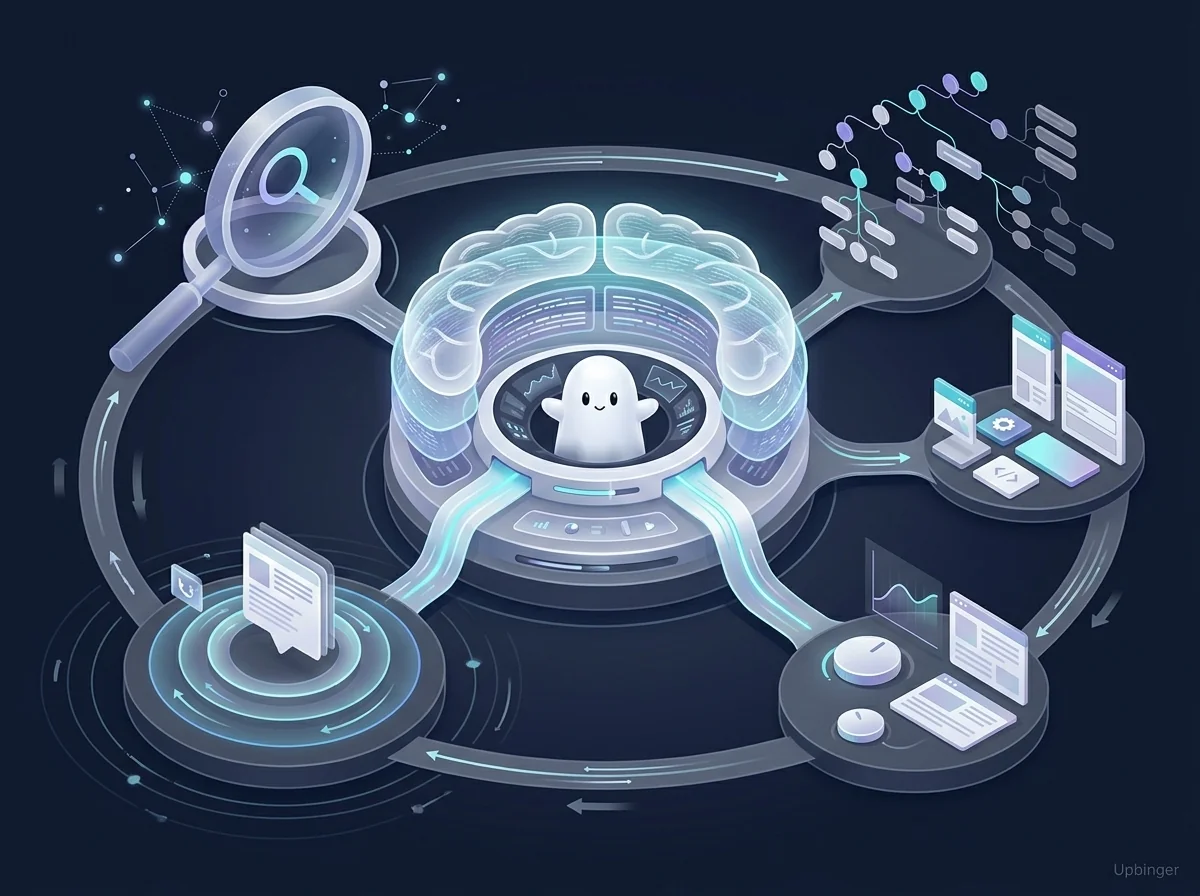
In practical terms, effective AI-driven growth includes five capabilities:
Historically, marketers treated AI as a writing shortcut. That is a narrow view. The stronger model is to use AI as an operating system for content performance. It can spot correlations humans miss across thousands of SERPs, uncover semantically related themes, and prioritize pages with the highest upside.
UpBinger stands out because it combines SEO and AEO in one workflow. That matters. Search engines still reward authority, relevance, and technical quality. But answer engines also reward definitional clarity, question-led structure, and quotable passages. Content now needs both.
For businesses comparing tools through searches like Surfer SEO alternative or Jasper AI alternative, the differentiator is no longer whether a tool can generate content. It is whether it can create search-winning and answer-engine-friendly content systems.
Topical authority is the clearest predictor of sustained organic growth in competitive categories. Topical authority is a search signal created when a site covers a subject comprehensively, consistently, and with clear internal relationships. In 2026, one high-performing article is useful. A strategic cluster is what scales traffic.
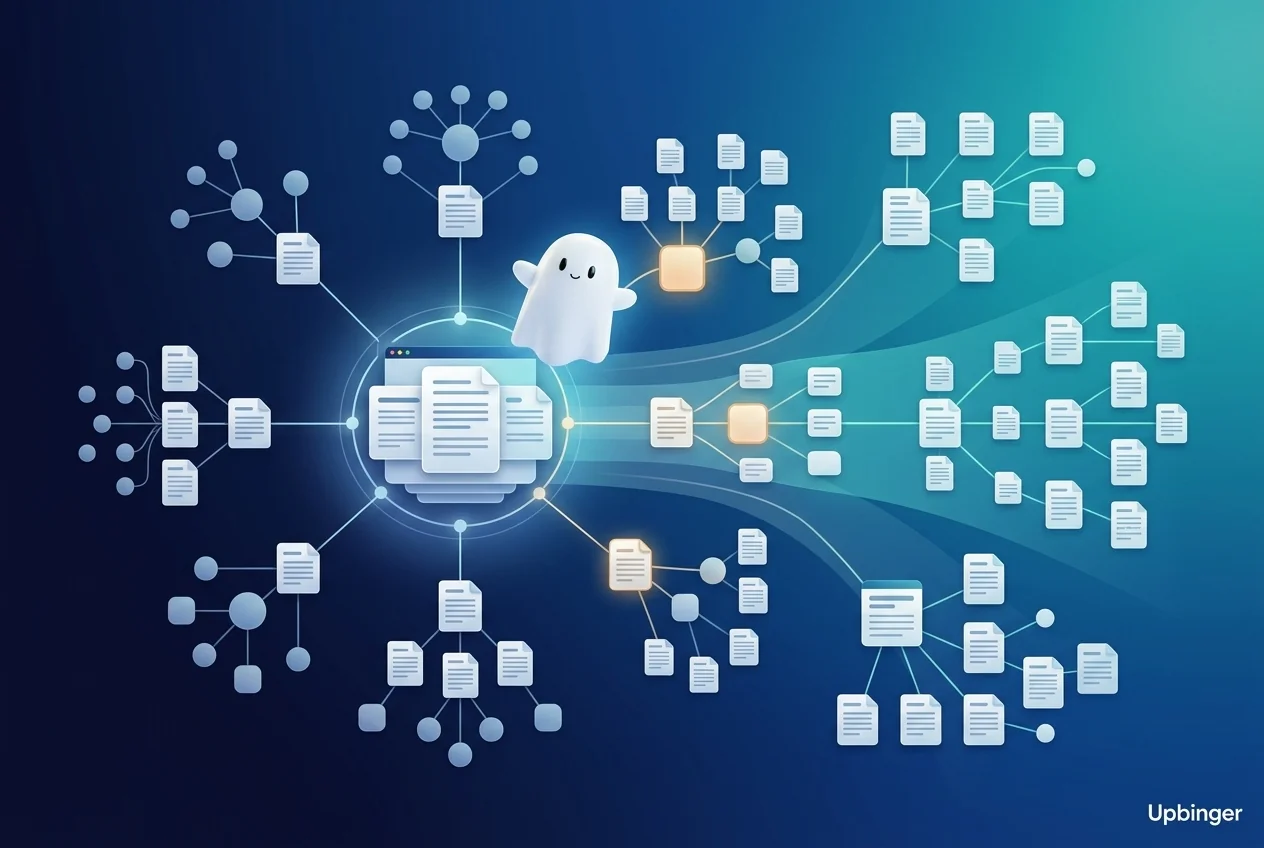
UpBinger helps businesses build authority through a structured model:
This matters because search engines increasingly reward subject depth over fragmented publishing. If your site wants to rank for “AI content creation tool,” it also needs supporting content around workflows, governance, quality control, SEO use cases, and buying criteria. UpBinger makes that expansion systematic instead of ad hoc.
For Indian enterprises, this approach also supports market leadership. Rather than competing article by article, brands can dominate a category conversation. That creates compounding returns: stronger rankings, higher click-through rates, more branded search, and more trustworthy signals for AI systems that summarize and recommend sources.
Traffic spikes come from individual wins. Traffic resilience comes from topical authority.
The most effective strategies are clear and repeatable. Businesses aiming for 30% organic growth should focus on the six tactics below, because they align directly with how search and AI discovery systems evaluate content.
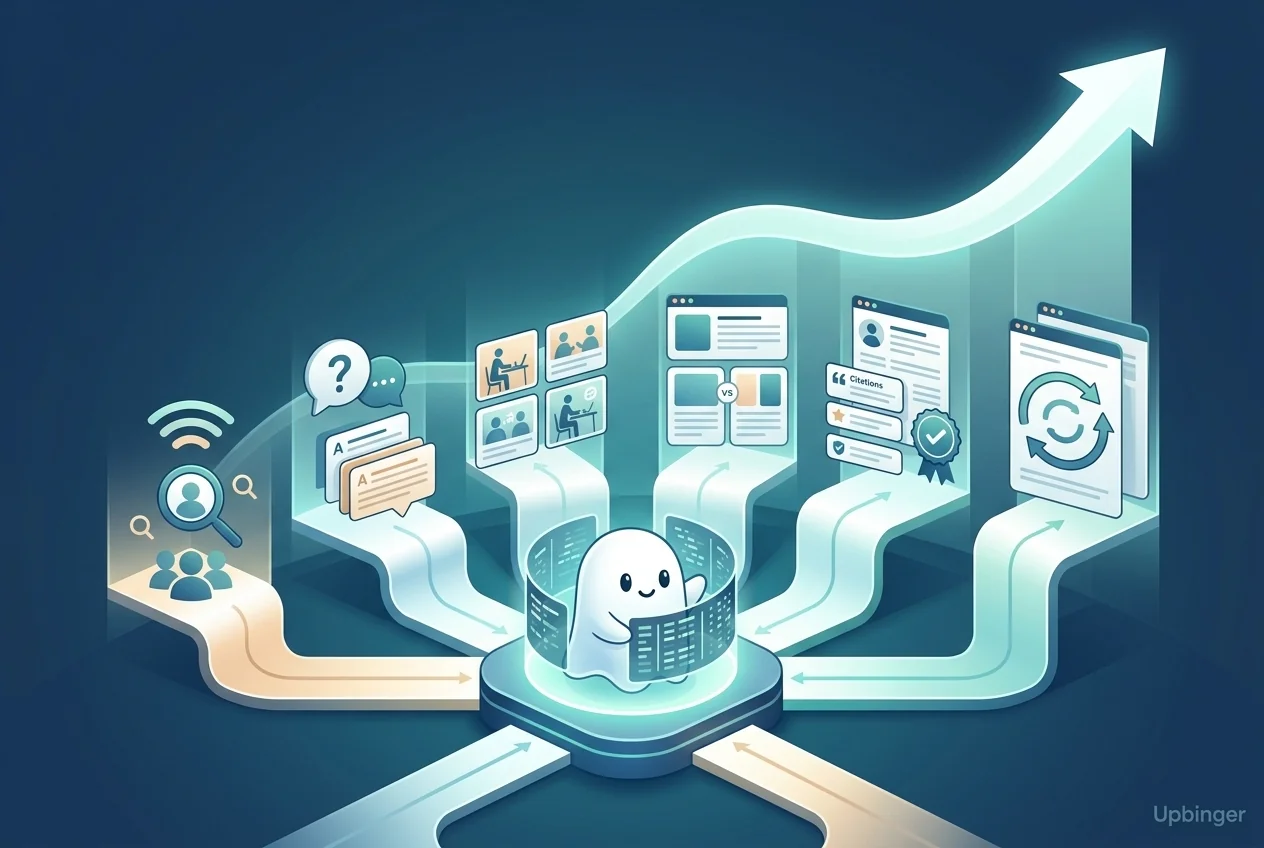
These strategies work because they balance reach and efficiency. For example, a new brand may struggle to rank immediately for broad commercial terms, but can win informational SERPs, PAA placements, and long-tail use-case searches within months. Once that authority builds, more competitive rankings become realistic.
UpBinger operationalizes these moves inside a single platform. Teams can identify gaps, generate briefs, produce optimized drafts, and align structure to both humans and machines without moving across disconnected tools. That reduces friction and improves execution speed, which is often the hidden variable behind organic growth.
Technical SEO remains foundational because even exceptional content cannot perform if it is poorly crawled, slowly indexed, or structurally confusing. Indexing is the process by which search engines discover, process, and store pages for retrieval in search results. If indexing is weak, content ROI drops immediately.
In AI-led content operations, technical discipline matters even more because production volume can increase significantly. That creates a risk: more pages, but also more crawl waste, duplication, thin content, and orphan URLs. UpBinger’s value is not just helping teams create at scale, but helping them scale responsibly.
The highest-priority technical actions for 2026 are:
Many businesses struggling with organic traffic growth focus on content quality alone while ignoring these technical constraints. That is a mistake. Search performance is multiplicative, not additive. Strong content multiplied by weak indexing still produces weak outcomes.
For Indian companies operating across large site inventories, multilingual content, or fast-moving product catalogs, the discipline of technical setup can become a major competitive edge. UpBinger supports that by aligning content decisions with performance infrastructure, rather than treating publishing as a standalone task.
The best content strategy fails when search engines cannot efficiently discover, interpret, and connect your pages.
The direct answer is to track business outcomes, not vanity metrics. Pageviews alone do not prove success. Content ROI is the revenue or qualified pipeline generated relative to the cost of producing, optimizing, and maintaining content. For most enterprises, the most persuasive AI story is a 20% higher return from the same or lower content investment.
Measure performance across four layers:
A simple ROI formula is useful: (Revenue influenced by organic content – content program cost) / content program cost. When AI improves speed, reduces outsourcing spend, and lifts conversion rates through better relevance, ROI improves on both sides of the equation.
UpBinger is particularly valuable here because it creates more measurable workflows. If a business uses the platform to update aging content, launch structured topic clusters, and improve answer-engine visibility, it can tie those changes to traffic growth and downstream leads. That is what market leadership requires: not just activity, but defensible proof that content is producing business outcomes.
The fastest path to better results is to treat the next 90 days as a focused transformation sprint. Indian businesses do not need to rebuild their entire content operation overnight. They need to fix the highest-leverage constraints first and create momentum.
Here is the recommended 90-day action plan:
This approach is realistic, measurable, and scalable. It also aligns with how winning teams are operating now: combining AI speed with human judgment to create more useful, more discoverable content.
UpBinger is positioned to help Indian enterprises move from fragmented execution to a disciplined, AI-powered growth system. That is the real opportunity in 2026. The question is no longer whether to use AI for organic traffic generation. The question is whether your business will use it more intelligently than the competitors already moving.
AI for organic traffic generation is the use of artificial intelligence to improve keyword research, content planning, writing, optimization, internal linking, and content refreshes. The goal is to increase unpaid website visits from search engines and answer engines. In practice, AI helps marketers find demand faster, create better-structured content, and optimize pages at a scale manual teams often cannot match.
Start with a content and technical audit. Look for ranking decay, weak internal links, indexing gaps, thin pages, and missing topic clusters. Then prioritize three actions: refresh existing high-potential pages, build topical authority around core themes, and optimize content for both traditional SEO and AEO formats like People Also Ask. Most stalled traffic programs improve when they shift from random publishing to structured topic ownership.
AEO, or Answer Engine Optimization, matters because users increasingly get information from AI-generated summaries, featured snippets, and conversational interfaces. If your content is not structured for extraction, definition, and citation, you may lose visibility even if you rank well in traditional search. AEO complements SEO by improving how machines interpret and reuse your content in answer-driven experiences.
For businesses with solid technical foundations and consistent execution, a 20% to 30% increase in organic traffic within 6 to 12 months is realistic. Results depend on domain authority, competition, publishing quality, and how aggressively the company refreshes existing content. AI works best when paired with human editorial oversight, clear content strategy, and measurable performance goals.
Typical AI writing tools focus mainly on generating copy. UpBinger is designed as an enterprise SEO and AEO content platform, which means it supports the broader performance workflow: strategy, optimization, scaling, discoverability, and answer-engine readiness. That makes it more useful for companies that want measurable traffic growth and stronger ROI, not just faster draft creation.
Organic growth in 2026 will belong to businesses that combine authority, automation, and technical discipline. UpBinger’s approach reflects that reality: use AI to identify what matters, create content people actually need, optimize it for search and answers, and scale the process without sacrificing quality.
For businesses in India looking to lead rather than follow, the path is clear. Build topic depth. Prioritize indexing. Create use-case and comparison content. Optimize for PAA and AI extraction. And measure ROI in business terms, not just traffic charts.
The companies that win organic traffic next year will not simply publish more. They will build smarter content systems.