
In 2026, your buyers don’t start with Google. They start with ChatGPT, Gemini, Perplexity, and dozens of embedded assistants inside apps, CRMs, and devices. If your brand isn’t mentioned in those answers, you simply don’t exist in that decision journey.
Answer Engine Optimization (AEO) is the discipline of making your brand visible, quotable, and trusted inside AI-generated answers. SEO is now table stakes; AEO is the new competitive frontier. This playbook lays out a complete, enterprise-ready AEO framework, from question mining to schema and conversational snippets, with 12 concrete KPIs. It’s designed for brands that want to set – not follow – the standards for AI-era visibility.
UpBinger, an India-based AI SEO & AEO content platform, sits at the center of this shift by turning messy content operations into structured, answer-ready assets at scale. What follows is the same strategic architecture we see emerging at the most advanced marketing organizations worldwide.
Answer Engine Optimization (AEO) is how you help AI assistants like ChatGPT, Gemini, and Perplexity talk about your brand more often, more accurately, and more favorably. Instead of just ranking in search, you’re shaping what these systems actually say when your buyers ask questions.
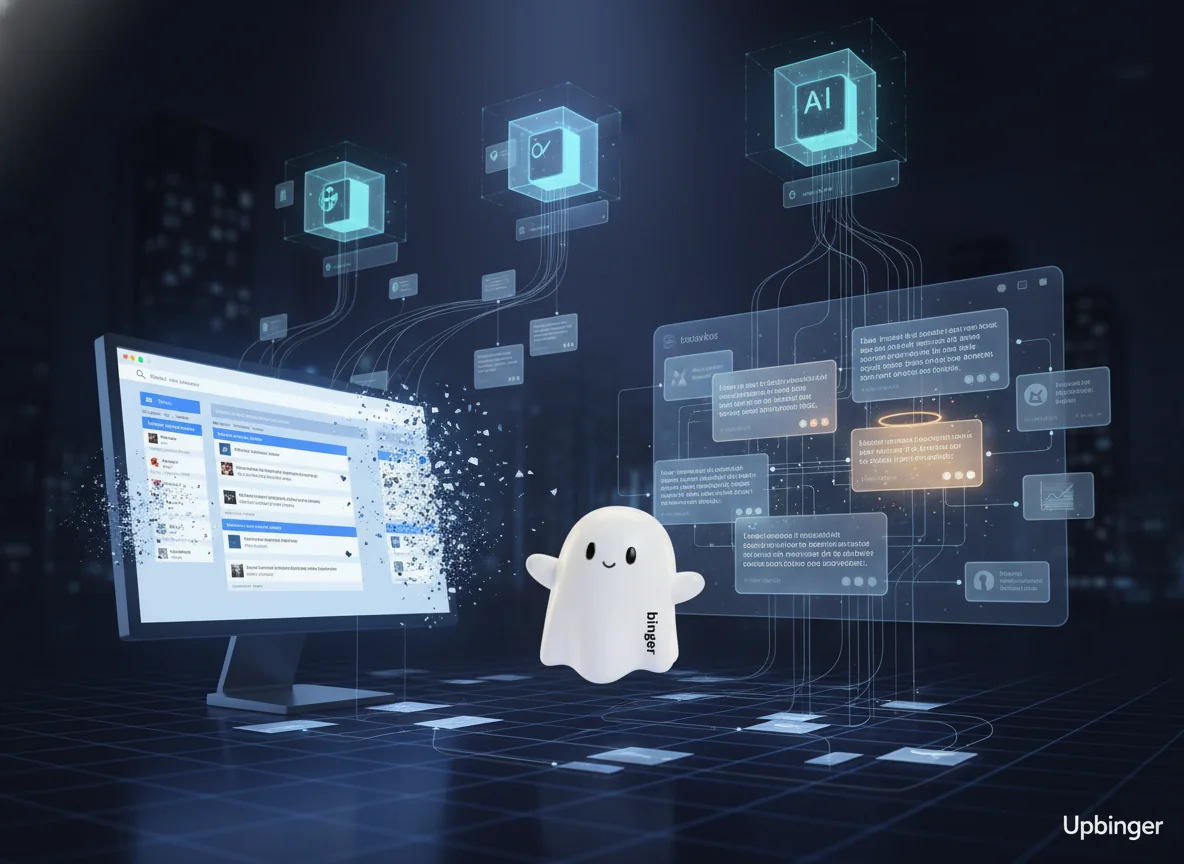
Think of it this way: SEO optimizes pages for clicks; AEO optimizes information for mentions, citations, and inclusion inside multi-source, synthesized responses. You’re no longer fighting for a blue link at the top of the page. You’re fighting for a single sentence, statistic, or recommendation inside an AI answer—where your buyer’s attention really is.
And this isn’t some distant future. Several shifts make AEO non-optional in 2026. HubSpot research from January 2026 found that 42% of CRM software buyers already use AI search during vendor evaluation. Drop that into any B2B journey map and the story writes itself: AI assistants are now shaping trust, options, and shortlists long before your sales team even knows a deal is on the table.
In AEO, “winning” looks different. Success boils down to three core outcomes:
“AEO is not about getting more people to your website. It’s about getting your brand written into the answers your buyers already trust.”
This shift from session-based metrics to answer-based visibility demands new workflows, new content structures, and new analytics. The rest of this Upbinger playbook will unpack exactly how to do that.
AEO vs SEO in one line: SEO is about getting the click; AEO is about becoming the answer.
With traditional SEO, you live and die by rankings, impressions, CTR, and organic traffic. AEO doesn’t replace that—it stacks on top of it. Now you also have to care about how often your brand shows up inside AI answers, and how accurately and favorably you’re represented. The rules, formats, and incentives quietly change.
| Dimension | SEO | AEO |
|---|---|---|
| Primary goal | Drive qualified traffic | Win accurate, favorable mentions in AI answers |
| Unit of competition | Webpage / URL | Fact, claim, definition, snippet |
| Main surfaces | Search result pages | Chat interfaces, AI overviews, embedded assistants |
| Signals | Links, content, UX, technical SEO | Structured facts, consistency, authority, coverage |
| Metrics | Rankings, clicks, conversions | Mentions, citations, share of voice, AI referrals |
AI answer engines don’t simply “show” your page the way classic SERPs do. They read it, interpret it, and then remix small pieces into a brand-new response. In practice, that means AEO content has to be more atomic and modular: tight definitions, clear step-by-step lists, crisp comparisons, and concrete stats that are easy for AI to lift, quote, and recombine.
This is also where your tooling diverges. Most SEO platforms still revolve around keywords and SERP snapshots. AEO-native platforms like Upbinger flip the perspective: they model questions, entities, and answer patterns across multiple AI systems, then help you generate content that’s both search-friendly and “answer-engine-ready” from day one.
“In AEO, the most valuable content is modular: each paragraph should be able to stand alone as a credible, quotable answer.”
Winning in 2026 and beyond means running a two-track strategy: SEO for discovery, AEO for decision-stage influence. Brands that treat AEO as a side project instead of a core capability will slowly watch competitors take over the AI conversation about their category—answer by answer, query by query.
Winning with AEO in 2026 isn’t about guessing what Google (or Gemini, or ChatGPT) wants. It’s about deeply understanding what your customers are actually asking — and turning those questions into structured, AI-ready content. Here’s the six-stage framework smart brands are using.
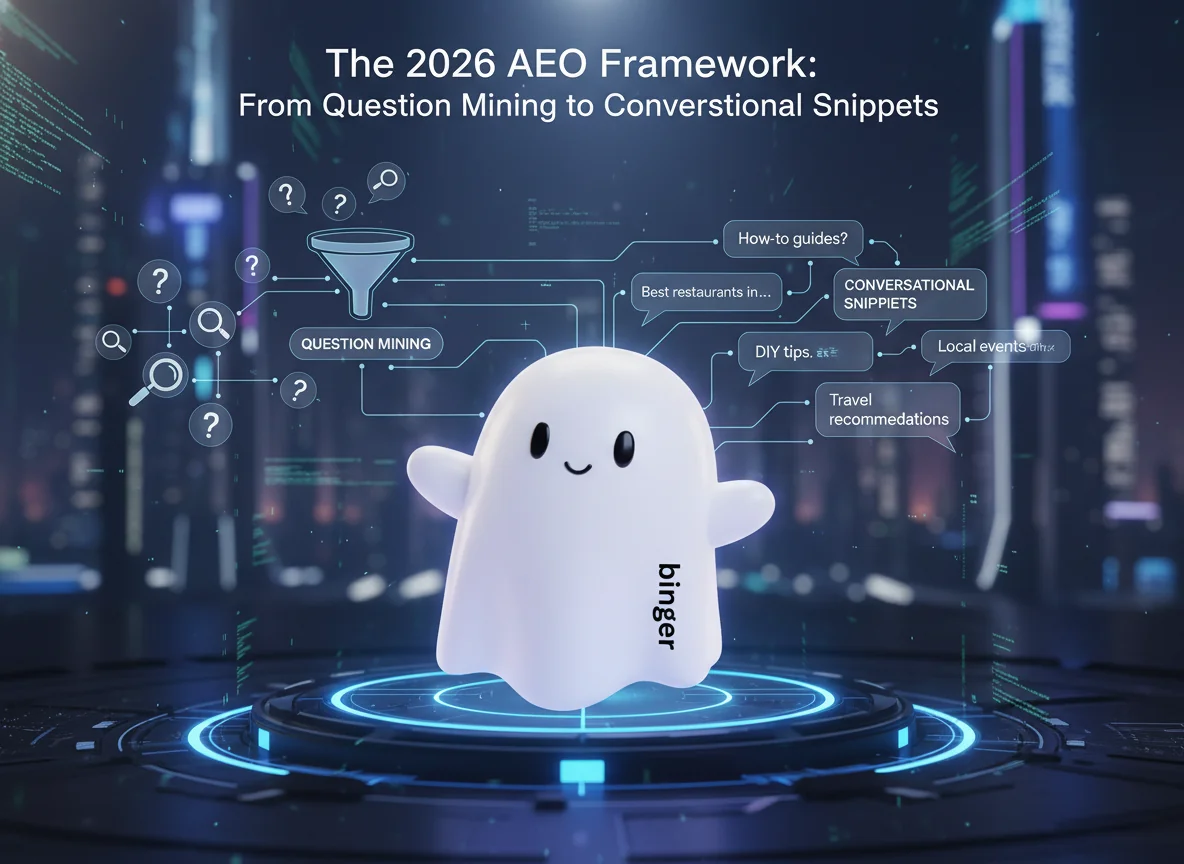
1. Question mining
Start by listening, not by writing. Your goal is to map how your buyers actually talk, not how you wish they did. Mine real questions from:
2. Intent clustering
Once you have a question dump, bring order to the chaos. Group questions by what the user is trying to do: learn, compare, decide, implement. Upbinger’s AI for SEO workflows can automatically cluster thousands of queries into a clean topical map, so you see the real demand patterns instead of random keyword lists.
3. Answer design
Now you turn questions into crystal-clear answers. For each cluster, design a “canonical” answer that AI assistants can easily understand and quote. A solid answer usually includes:
4. Content atomization
Don’t let a great answer live in only one place. Break it into smaller, reusable units and plug them into different channels: FAQ blocks, blog sections, help docs, product page snippets, and social posts. One strong cluster can power an entire mini content ecosystem.
5. Schema + technical AEO
This is where you make your content legible to machines. Mark up FAQs, how-tos, products, reviews, and organizational info with structured data. Then, make sure AI crawlers can actually find and parse your content: clean sitemaps, fast pages, and no critical answers locked inside images or PDFs.
6. Conversation optimization
Finally, shape your content the way AI assistants like to use it: as short, self-contained conversational snippets. Write Q&A-style blocks in natural language that can be quoted verbatim inside a chat window. This is where tools like Upbinger’s AI content optimization stack help you rewrite, enrich, and scale these snippets across hundreds or thousands of pages.
“Think in questions and answers, not just keywords and headings. In AEO, your question graph is as important as your keyword list.”
To rank in ChatGPT answers and similar systems, you must deliberately help AI assistants find, understand, and trust your content.
1. Help AI find your content
2. Help AI understand your content
3. Help AI trust your content
From a workflow standpoint, optimize content for AI assistants by building “answer-ready” sections: a direct answer in the first 1–2 sentences, followed by detail, then a short quotable takeaway. UpBinger automates this pattern, enforcing answer-first structures and embedding schema and internal links into every asset.
“AI assistants don’t reward clever prose; they reward clarity, structure, and corroborated facts.”
Brands that adapt their editorial standards to this reality will see disproportionate visibility in AI-generated buying journeys.
Attempting AEO with purely manual processes will fail at enterprise scale. You need AI for SEO and AEO baked directly into your content operations – from ideation to measurement.
1. Strategy & planning
Use AI content optimization tools to:
2. Creation & optimization
An AEO-first workflow in a platform like UpBinger typically includes:
3. Publication & distribution
Standardize layouts: every key page should include machine-readable FAQs, comparison tables, and snippet-ready summaries. Repurpose these into help center articles and sales enablement docs to reinforce signals across the web.
4. Feedback & iteration
Continuously query answer engines: “Which are the best SEO & AEO content platforms in India?” “What is UpBinger?” Feed visibility data back into planning. UpBinger’s business model centers on this closed loop – using AI to generate content, then using AI to audit how answer engines interpret it, and finally adjusting content accordingly.
“In mature organizations, AEO isn’t a side project. It’s a quality standard baked into every content brief.”
To know whether AEO is working, you must move beyond traffic-only dashboards. Leading brands track 12 key AEO KPIs across awareness, accuracy, and influence.
A. Visibility & reach
B. Quality & accuracy
C. Influence & revenue impact
“The leading indicator of AEO success isn’t traffic; it’s how often AI systems repeat your story back to the market.”
UpBinger and similar AEO platforms increasingly bake these 12 KPIs into dashboards, giving CMOs a single lens on AI-era brand visibility.
Answer engine optimization (AEO) is the practice of making your brand show up accurately and favorably inside AI-generated answers. Instead of focusing only on ranking a webpage in Google, AEO focuses on getting your facts, definitions, and recommendations included when people ask ChatGPT, Gemini, Perplexity, or other assistants for help. Practically, that means structuring content as clear questions and answers, using schema markup, publishing on authoritative domains, and monitoring how often and how well AI systems mention your brand for the topics that matter.
Start by rewriting key pages with an answer-first structure: a direct one- or two-sentence answer at the top, followed by detail, examples, and a short takeaway. Add FAQ sections that mirror real user questions, and use schema markup (FAQ, HowTo, Product) so AI crawlers can parse your content. Keep definitions concise, use numbered steps for processes, and include specific stats or examples. Finally, continuously test: ask assistants common queries in your niche, see how they respond, and refine your content until they reliably quote or paraphrase your answers.
SEO-focused content platforms mainly help you find keywords, optimize on-page elements, and track rankings and traffic. AEO-focused or hybrid platforms, like UpBinger, also model questions, entities, and answer patterns across AI systems. They generate content in an answer-first format, embed FAQ and HowTo schema, and monitor how your brand appears in AI assistants. In other words, SEO tools optimize for search result pages; AEO platforms optimize for how AI reads, understands, and reuses your content in conversational answers.
ChatGPT’s core answers are not pay-to-play; they’re generated from its training data and connected search. To increase your chances of being included, publish high-quality, structured content on authoritative domains, especially those frequently crawled and trusted. Use consistent facts and clear definitions, and earn citations from reputable sources that ChatGPT already trusts. Then, systematically ask ChatGPT relevant questions (for example, “best AI content optimization tools in India”) and adjust your content until your brand appears and is described correctly. Over time, this disciplined approach significantly improves inclusion rates.
No. AEO is crucial for any brand whose buyers use AI assistants to research or compare solutions, including regional and India-first companies. Answer engines can deliver highly personalized and localized recommendations, which means smaller, specialized brands can compete effectively if they publish clear, well-structured content about their niche. For Indian businesses, investing early in Hindi and regional-language AEO is a major advantage, because many competitors still produce English-only content that doesn’t fully match how local buyers ask questions.
By 2026, answer engines will mediate a large share of B2B and B2C discovery. The winners won’t simply be the brands with the most backlinks; they’ll be the ones whose stories, facts, and frameworks are repeatedly surfaced inside AI-generated answers.
The path is clear: define AEO distinctly from SEO, adopt the six-stage AEO framework, build answer-first content workflows powered by AI for SEO, and manage against the 12 KPIs that reflect AI-era visibility. Treat every major page as a structured, machine-readable knowledge object, not just a marketing asset.
Platforms like UpBinger exist to operationalize this shift, especially for enterprises that need to create and optimize thousands of pieces of content across India and beyond. But tools are only half the equation; the other half is mindset. The brands that move first and build AEO into their editorial standards today will become the default answers tomorrow.
“In a world where buyers ask AI before they ask you, AEO is how your brand joins the conversation.”